.png)

.svg)



TL;DR:
- Multi-channel marketing uses three or more channels to deliver consistent messaging and improves purchase rates, retention, and ROI. Small and mid-sized businesses should implement multi-channel campaigns sequentially, focusing on data infrastructure and message coherence, with AI tools enhancing efficiency. Proper planning and phased expansion enable these businesses to compete effectively and maximize growth.
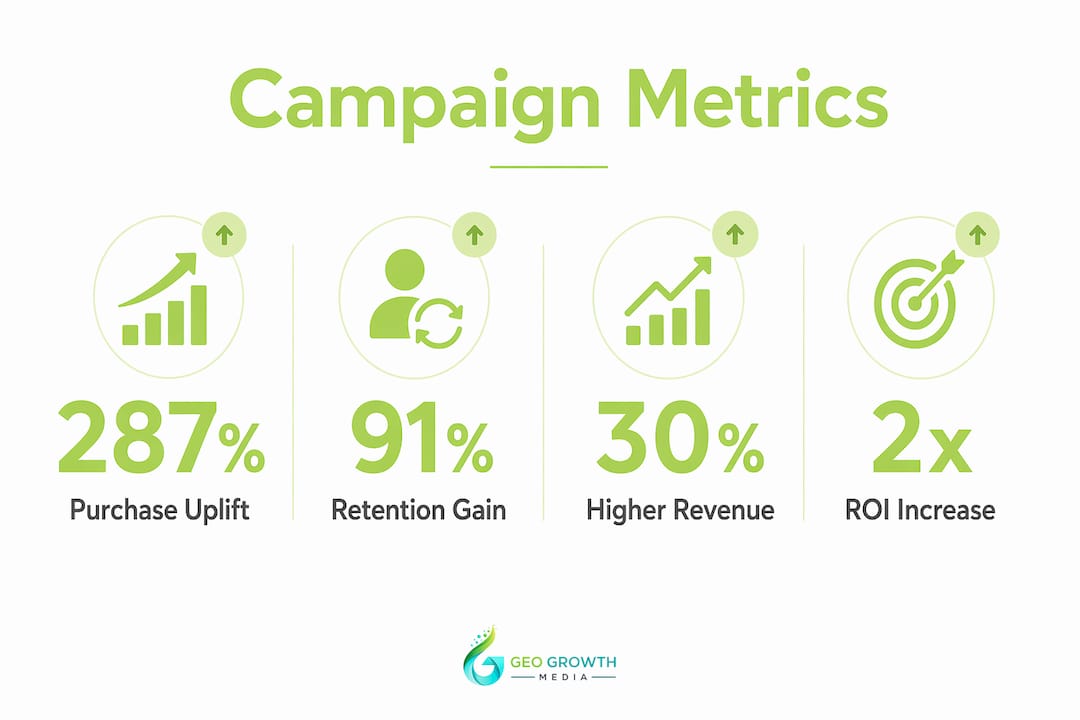
Multi-channel marketing is defined as the coordinated use of three or more channels, including email, paid social, search, and SMS, to reach customers with consistent messaging across every touchpoint. Brands that invest in multi-channel campaigns consistently outperform single-channel competitors on every metric that matters: purchase rates, customer retention, and return on investment. Brands using three or more channels achieve 287% higher purchase rates than those relying on a single channel. That figure alone makes the case for diversifying your marketing mix. Platforms like Meta, Google Ads, and automation tools such as Braze have made coordinated, cross-channel execution accessible to businesses of every size. If you are a marketer or decision-maker at a small or mid-sized business, the question is no longer whether to invest in multi-channel campaigns. It is how to do it well.
Why invest in multi-channel campaigns: the measurable evidence
The performance gap between single-channel and multi-channel marketing is not marginal. It is structural. Brands running five or more channels see 412% higher purchase rates compared to single-channel approaches. Each additional channel compounds the effect, because customers encounter your brand at more decision points in their buying journey.
Retention tells the same story. Companies with mature multi-channel strategies report a 91% improvement in customer retention, compared to 33% for single-channel outreach. That is a 56 percentage point gap. Retaining a customer costs significantly less than acquiring a new one, so this retention advantage directly reduces your cost per acquisition over time.
The revenue impact extends beyond individual transactions. Customers who interact across multiple channels deliver 30% higher lifetime ROI than single-channel shoppers, driven by higher order values and greater purchase frequency. A customer who discovers your brand through a Google search, sees a retargeting ad on Meta, and converts via an email offer is worth considerably more than one who converts on a single touchpoint.
Single-channel vs multi-channel: key metrics compared
| Metric | Single-channel | Multi-channel (3+ channels) |
|---|---|---|
| Purchase rate uplift | Baseline | 287% higher |
| Customer retention | 33% | 91% |
| Customer lifetime ROI | Baseline | 30% higher |
| Campaign ROI | Baseline | Approximately 2x |
Multi-channel marketing ROI runs at roughly twice the level of single-channel campaigns. A 70% majority of marketers report significant ROI improvement from omnichannel strategies. These are not theoretical projections. They reflect what happens when customers receive coherent, repeated messaging across channels they already use.
What operational challenges affect multi-channel success?
The benefits are clear, but execution is where most small and mid-sized businesses struggle. The most common failure point is fragmented data. Google Ads uses a 30-day last-click attribution window, Meta uses a 7-day click and 1-day view model, and LinkedIn operates on its own internal conversion windows. When your channels report performance differently, you cannot make confident budget decisions.

This is what analysts call “attribution theatre.” You have dashboards full of numbers, but none of them tell you which channels actually drove revenue. Without a unified data infrastructure, multi-channel campaigns lack actionable insights and become expensive guesswork dressed up as strategy.
Channel conflict is the second major risk. Running paid search, paid social, and email simultaneously without coordinated messaging creates audience confusion. A prospect who sees a discount offer on Meta and then receives a full-price email the same day loses trust in your brand. Message architecture must maintain coherence across formats before you scale.
The operational challenges to address before scaling include:
- Data fragmentation. Standardise attribution models across platforms before adding new channels.
- Message conflict. Build a single creative brief that governs tone, offer, and timing across all active channels.
- Resource overreach. Running too many channels with a small team dilutes quality across all of them.
- Attribution gaps. Invest in multi-touch attribution tools before you need them, not after you are confused by the data.
Pro Tip: Use a Channel Prioritisation Matrix to rank your channels by audience fit, cost per acquisition, and data quality before committing budget. Add channels sequentially, not simultaneously, to maintain control and clarity.
Sequential channel rollout is the expert-recommended approach for resource-constrained teams. Build depth on two or three high-performing channels first. Then expand once your data infrastructure and creative processes are solid.
How does AI improve multi-channel marketing effectiveness?
AI has moved from a nice-to-have to the operational backbone of effective multi-channel campaigns. AI adoption has reached 95.4% among B2C marketers running omnichannel programmes. That adoption rate reflects a practical reality: coordinating messaging across email, SMS, push notifications, and paid ads at scale is not feasible without automation.
Platforms like Braze enable workflow automation that reduces manual effort through frequency capping, suppression of disengaged contacts, and real-time personalisation triggers. The practical result is fewer wasted impressions and better conversion rates. You stop paying to reach people who have already converted or opted out.
AI also improves A/B testing speed. Where a manual test might run for two to four weeks to reach statistical significance, AI-driven testing tools can identify winning variants faster by dynamically reallocating traffic. This compounds across a multi-channel campaign, where you might be testing subject lines, ad creative, landing page copy, and send times simultaneously.
The channels that benefit most from AI coordination include:
- Email. Send-time optimisation and dynamic content blocks based on user behaviour.
- Paid social. Automated audience suppression and lookalike expansion on Meta and TikTok.
- SMS and push notifications. Frequency capping to prevent fatigue and churn.
- Google Ads Performance Max. AI-driven asset allocation across Search, Display, YouTube, and Shopping simultaneously.
Pro Tip: Before deploying AI personalisation, audit your data quality. AI amplifies what is already in your data. If your customer segments are poorly defined, automated personalisation will simply deliver the wrong message faster.
For a deeper look at how AI is reshaping campaign performance, Geo Growth Media’s guide on AI and marketing ROI covers the practical applications in detail.
How should small businesses implement multi-channel campaigns?
The biggest mistake small and mid-sized businesses make is launching every channel at once. It feels ambitious. It is actually a fast route to poor performance across the board. The right approach is structured and sequential.
Step 1: Start with audience research and channel selection
Map where your customers actually spend time before you spend budget. A B2B audience may convert through LinkedIn and email. A D2C brand may find Meta and Google Shopping deliver the best returns. Your channel selection should follow your audience data, not industry trends.
Step 2: Build your measurement framework first
Set up multi-touch attribution before you launch. Decide which attribution model you will use as your primary source of truth and apply it consistently. Without this, you will misread which channels are performing and cut the wrong budgets.
Step 3: Roll out channels sequentially
Launch with your two highest-confidence channels. Run them for 60–90 days. Analyse performance, refine your messaging, and then add a third channel. This approach, recommended by analysts at Improvado, prevents management overreach and keeps your data clean.
Sequential rollout vs all-at-once launch
| Factor | Sequential rollout | All-at-once launch |
|---|---|---|
| Data clarity | High: clean, comparable results | Low: difficult to isolate channel performance |
| Resource demand | Manageable for small teams | High risk of quality drop across channels |
| Attribution accuracy | Easier to establish | Fragmented from day one |
| Speed to optimise | Faster per channel | Slower overall due to complexity |
| Risk level | Lower | Higher |
Step 4: Coordinate your messaging architecture
Every channel should carry the same core offer and brand voice, adapted to the format. An email can be detailed. A Meta ad must be immediate. A push notification must be brief. The message is the same. The format changes. Coherent messaging across channels is the practical intermediate step between running separate campaigns and achieving true omnichannel integration.
For practical guidance on building data-driven campaign frameworks, Geo Growth Media’s resource covers the measurement and attribution setup in detail.
Key takeaways
Multi-channel campaigns deliver measurably superior results because they meet customers at multiple decision points with consistent, coordinated messaging, making single-channel approaches structurally unable to compete on retention, purchase rates, or lifetime value.
| Point | Details |
|---|---|
| Purchase rate advantage | Brands using three or more channels achieve 287% higher purchase rates than single-channel competitors. |
| Retention gap | Multi-channel strategies deliver 91% customer retention versus 33% for single-channel outreach. |
| Build data infrastructure first | Unified attribution must be in place before scaling channels, or campaign data becomes unreliable. |
| Sequential rollout wins | Adding channels one at a time protects data quality and prevents resource overreach for smaller teams. |
| AI is now standard | AI adoption among B2C omnichannel marketers stands at 95.4%, making automation a baseline expectation. |
Geo Growth Media’s view on multi-channel investment
Multi-channel marketing shifted from a competitive advantage to a survival requirement by 2025. That shift happened faster than most businesses were ready for. What I see consistently when working with small and mid-sized businesses is not a lack of ambition. It is a lack of sequencing.
Teams launch five channels simultaneously, burn through budget in 90 days, and conclude that multi-channel marketing does not work for businesses their size. The problem was never the strategy. It was the order of operations. Data infrastructure before channel expansion. Depth before breadth. Two channels done well will outperform five channels done poorly every time.
The AI piece is genuinely transformational, but only if your underlying data is clean. I have seen businesses deploy sophisticated automation tools on top of poorly segmented audiences and wonder why personalisation is not lifting conversion rates. The tool is not the problem. The foundation is.
The businesses that will win over the next three years are not the ones with the most channels. They are the ones with the clearest picture of which channels drive real revenue, and the discipline to invest there first. Start smaller than feels comfortable. Measure everything. Then scale what works.
— Geo Growth Media
How Geo Growth Media supports multi-channel campaign growth
Running effective multi-channel campaigns requires the right mix of channels, clear measurement, and consistent creative execution across every touchpoint.
Geo Growth Media works as an extension of your marketing team, building and managing campaigns across paid social media (Meta, TikTok, LinkedIn), Google Ads, SEO, and web development. Every strategy is built around your specific goals, sector, and budget, with transparent reporting so you always know what is working. If you are ready to move beyond single-channel marketing and build a campaign structure that compounds over time, explore Geo Growth Media’s digital marketing services or get in touch to discuss your next campaign.
FAQ
What is multi-channel marketing?
Multi-channel marketing is the coordinated use of three or more channels, such as email, paid social, search, and SMS, to reach customers with consistent messaging. It differs from omnichannel in that channels may operate semi-independently rather than sharing a fully unified data layer.
How much better do multi-channel campaigns perform?
Brands using three or more channels achieve 287% higher purchase rates than single-channel approaches, and those using five or more see 412% higher purchase rates. Campaign ROI runs at approximately twice the level of single-channel campaigns.
What is the biggest risk when running multi-channel campaigns?
Fragmented data and inconsistent attribution models are the most common failure points. Without a unified measurement framework, it is impossible to identify which channels are driving revenue and which are wasting budget.
How many channels should a small business start with?
Start with two high-confidence channels based on your audience data, run them for 60–90 days, then add a third. Sequential rollout keeps data clean and prevents resource overreach, which is the most common cause of multi-channel campaign failure for smaller teams.
Does AI make multi-channel marketing more accessible for smaller businesses?
AI adoption among B2C omnichannel marketers stands at 95.4%, and tools like Braze make workflow automation, frequency capping, and real-time personalisation accessible without large in-house teams. The key requirement is clean audience data before deploying automation.


.png)