.png)

.svg)




TL;DR:
- Improving online ROI depends on accurate tracking, marginal ROAS analysis, and disciplined creative testing. Automated bidding and first-party data collection enhance campaign efficiency and attribution accuracy. Consistent data audits and controlled experiments are essential for scaling profitable digital marketing efforts.
Online return on investment (ROI) is defined as the net revenue generated from digital marketing activity divided by the total cost of that activity. For small to medium-sized businesses and e-commerce brands, knowing how to increase ROI online is not a nice-to-have. It is the difference between scaling profitably and burning budget on campaigns that look busy but deliver little. Fragmented tracking and undefined revenue models cause most ROI measurement failures, which means the fix starts long before you touch your ad creative or bidding strategy. The good news is that the levers are well within reach if you know where to pull them.
What tracking setup do you need to increase ROI online?
Accurate measurement is the foundation of every improvement you will make. Without it, you are optimising blind. The core stack for any SME or e-commerce brand should include Google Analytics 4 (GA4), Google Tag Manager (GTM), a CRM integration that passes offline conversion data back into your ad platforms, and a reconciled cost-and-revenue pipeline that pulls spend from every channel into one place.

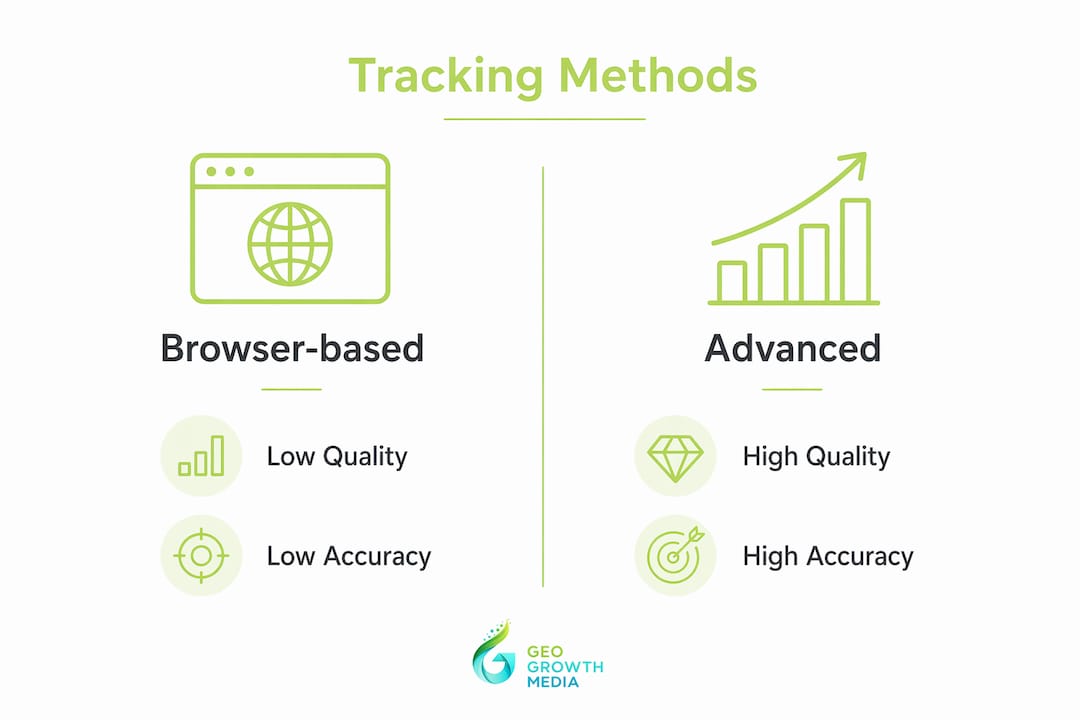
Attribution is where most businesses get stuck. Cross-device journeys mean a customer might discover your brand on a mobile ad, research on a desktop, and convert via email. Standard browser-based tracking misses parts of this journey. Server-side tracking improves data capture accuracy by sending conversion signals from your cloud server rather than the user’s browser, bypassing ad blockers and cookie restrictions. The practical result is a cleaner picture of which channels actually drive revenue.
First-party data is now the most reliable asset you have. With third-party cookies being phased out across major browsers, building your own data pipelines through tools like Facebook’s Conversions API (CAPI) is no longer optional. Server-side methods like CAPI enable cleaner first-party data capture, improving attribution fidelity and giving your campaigns better signals to learn from.
Pro Tip: Set up a weekly data audit in GA4 to flag any tracking gaps or conversion drops before they distort your optimisation decisions.
The table below compares common tracking approaches and their effect on ROI accuracy.
| Tracking method | Data quality | ROI accuracy impact |
|---|---|---|
| Browser-based pixels only | Low to medium | Misses blocked or cross-device conversions |
| GA4 with GTM | Medium | Good for on-site behaviour, limited cross-channel view |
| Server-side tracking with CAPI | High | Captures conversions browsers miss, improves attribution |
| CRM integration with ad platforms | Very high | Connects offline revenue to online spend for full ROI picture |
How do data-driven tactics and attribution frameworks boost marketing ROI?
Once your tracking is clean, the next step is using that data to make smarter budget decisions. Diagnostic attribution frameworks can prevent the loss of 15–30% of campaign budgets and increase attribution accuracy by 15–25%. That is a significant amount of money being reclaimed simply by understanding which touchpoints genuinely drive conversions.
The process starts with naming conventions. Consistent UTM parameters across every campaign, ad set, and creative mean your data stays organised and comparable. Without this discipline, your reports become a mess of unattributed traffic that makes cross-channel budgeting impossible.
Once your data is clean, shift your budget analysis from average ROAS to marginal ROAS. Average ROAS tells you how a channel performed overall. Marginal ROAS tells you what the next pound of spend in that channel will return. These two numbers are often very different, and optimising for the average leads to under-investing in profitable channels and over-investing in ones that have already plateaued.
Here is a practical sequence for applying these frameworks:
- Audit your attribution model. Switch from last-click to a data-driven attribution model in GA4 to see the full contribution of each channel.
- Standardise your UTM naming. Apply a consistent convention across all paid channels so cross-channel reporting is reliable.
- Segment by customer value. Use micro-segmentation to identify your highest-value customer cohorts and weight your budget towards acquiring more of them.
- Run controlled budget experiments. Increase spend by 10–15% in one channel at a time and measure the marginal return before scaling further.
- Review weekly, adjust monthly. Short review cycles catch inefficiencies early. Monthly adjustments give campaigns enough time to generate statistically meaningful data.
Pro Tip: When running budget experiments, hold all other variables constant. Changing creative and budget simultaneously makes it impossible to know which variable drove the result.
For e-commerce brands specifically, pairing this approach with advertising tips for e-commerce that focus on product-level ROAS can sharpen your allocation further, particularly during high-competition periods like peak trading seasons.
What role does automation play in maximising digital ad returns?
Automated bidding is one of the highest-leverage changes available to most SME advertisers right now. Smart Bidding strategies like Target ROAS enable real-time bid adjustments based on conversion likelihood, processing signals like device, location, time of day, and audience behaviour far faster than any manual process. The result is more conversions at a lower effective cost per acquisition.
The key to making Smart Bidding work is giving it quality signals. This is where your tracking setup from the earlier section pays off directly. Campaigns with clean conversion data and a sufficient volume of conversions (Google recommends at least 30–50 per month per campaign) give the algorithm enough to learn from. Campaigns with sparse or noisy data will underperform regardless of the bidding strategy applied.
Retargeting lists are another automation lever that many businesses underuse. Segmenting your audience by behaviour, such as cart abandoners, product page viewers, and past purchasers, and then applying bid multipliers to each segment, means your budget concentrates on the people most likely to convert. Past purchasers, in particular, often convert at a fraction of the cost of cold prospecting audiences.
- Target ROAS bidding: Set a realistic target based on historical performance, not an aspirational figure. Overly aggressive targets starve campaigns of impressions.
- Target CPA bidding: Best suited to lead generation campaigns where conversion value is consistent.
- Maximise conversion value: Useful during scaling phases when you want the algorithm to find the highest-value conversions within your budget.
- Retargeting bid adjustments: Apply positive multipliers to high-intent segments and negative multipliers to audiences who have already converted.
Pro Tip: Give any new Smart Bidding strategy at least two to four weeks before evaluating performance. The learning phase requires time and sufficient conversion volume to stabilise.
For a deeper look at structuring your paid campaigns around these principles, the paid ads strategy guide from Geo Growth Media covers bidding, targeting, and budget allocation in practical detail.
How do creative and keyword strategies improve conversion rates?
Creative and keyword quality determine whether your well-tracked, well-bid campaigns actually convert. Ad creative testing, long-tail keyword targeting, and fraud detection reduce wasted clicks and improve ROAS. These are not one-off tasks. They are ongoing disciplines that compound over time.
Long-tail keywords typically carry lower CPCs and higher purchase intent than broad terms. A user searching “women’s waterproof walking boots size 6 UK” is far closer to buying than one searching “walking boots.” Shifting budget towards these terms reduces your cost per click and improves your conversion rate simultaneously.
Follow this sequence to tighten your creative and keyword performance:
- Run structured A/B tests. Test one variable at a time: headline, image, call to action, or offer. Document results and apply winners across the account.
- Audit your search term reports weekly. Add irrelevant terms as negatives to stop paying for clicks that will never convert.
- Install a fraud detection tool. Invalid clicks from bots and click farms drain budgets silently. Tools that monitor for suspicious click patterns and automatically exclude offending IP addresses protect your spend.
- Review landing page alignment. Every ad should lead to a page that directly matches the ad’s promise. Misalignment between ad copy and landing page is one of the most common causes of poor conversion rates. Landing page speed and reliability directly affect whether optimised campaigns actually convert.
- Benchmark your CPA monthly. Track cost per acquisition by campaign and creative to identify which combinations deliver the best return.
Pro Tip: Use responsive search ads with at least eight headlines and four descriptions. This gives the algorithm enough combinations to identify which messaging resonates with different audience segments.
Key takeaways
Increasing online ROI requires clean tracking data, marginal ROAS analysis, automated bidding with quality signals, and continuous creative testing working together as a system.
| Point | Details |
|---|---|
| Fix tracking before optimising | Server-side tracking and CRM integration prevent the data gaps that distort ROI measurement. |
| Use marginal ROAS, not average | Marginal ROAS shows what the next pound of spend will return, preventing over-investment in plateaued channels. |
| Attribution frameworks save budget | Diagnostic attribution can recover 15–30% of campaign budgets lost to misattributed spend. |
| Smart Bidding needs clean signals | Automated bidding underperforms without sufficient, accurate conversion data feeding the algorithm. |
| Creative testing compounds over time | Structured A/B testing and negative keyword discipline reduce wasted spend and improve conversion rates month on month. |
The uncomfortable truth about online ROI growth
At Geo Growth Media, we have worked with enough SMEs and e-commerce brands to spot the pattern that holds most of them back. They come to us wanting better results from their ads, and the first thing we find is a tracking setup that is either broken, incomplete, or measuring the wrong things entirely. The campaigns are not the problem. The measurement is.
The second pattern we see is businesses chasing average ROAS as if it were the north star. A 4:1 ROAS benchmark is a useful reference point, but it tells you nothing about whether your next £1,000 of spend will return £4,000 or £1,500. That is the question that actually matters for scaling decisions, and it only gets answered through marginal analysis and controlled experimentation.
The brands that grow consistently are not the ones with the biggest budgets. They are the ones that treat their marketing data as a product in itself, investing in clean pipelines, disciplined naming conventions, and regular audits. Combine that with the right digital marketing approach for 2026 and you have a system that improves on its own over time.
— Geo Growth Media
How Geo Growth Media helps you build a higher-ROI marketing system
If you recognise any of the gaps described in this article, you are not alone. Most growing businesses hit the same ceiling: good products, active campaigns, but returns that do not reflect the effort going in.

Geo Growth Media works as an extension of your marketing team, handling everything from attribution setup and GA4 configuration to paid media management across Google Ads, Meta, and TikTok. Our digital marketing services are built around measurable outcomes, not vanity metrics. For e-commerce brands specifically, our ecommerce marketing expertise covers the full funnel from prospecting to retention, with strategies calibrated to your margins and seasonality. Get in touch to discuss an audit of your current setup and where the biggest gains are hiding.
FAQ
What is a good ROAS benchmark for SMEs?
A common ROAS benchmark is 4:1, meaning £4 returned for every £1 spent, but this varies significantly by industry and margin. Always set your target based on your own cost structure rather than a generic figure.
How does server-side tracking improve ROI measurement?
Server-side tracking sends conversion data from your cloud server rather than the user’s browser, bypassing ad blockers and cookie restrictions. This produces more complete conversion data, which improves attribution accuracy and gives automated bidding strategies better signals to work with.
What is marginal ROAS and why does it matter?
Marginal ROAS measures the return on the next pound of spend in a channel, rather than the average return across all spend. It prevents you from over-investing in channels that have already peaked and helps you find where additional budget will generate the most profit.
How quickly can attribution improvements reduce budget waste?
Diagnostic attribution frameworks can prevent the loss of 15–30% of campaign budgets once implemented correctly. The speed of improvement depends on how fragmented your current tracking is and how quickly you can consolidate your data pipelines.
Does creative testing really affect ROI significantly?
Structured A/B testing of ad copy, images, and calls to action directly reduces cost per acquisition by identifying which combinations convert most efficiently. Combined with negative keyword management and fraud detection, creative optimisation is one of the most reliable ways to improve returns without increasing spend.



.png)