.png)

.svg)



TL;DR:
- E-E-A-T in SEO is a four-part framework assessing Experience, Expertise, Authoritativeness, and Trustworthiness to determine content quality. Building genuine signals in these areas is crucial, especially for YMYL topics, as results appear gradually over months and require ongoing effort. Focusing on authentic knowledge, transparent practices, and authoritative recognition enhances long-term search visibility.
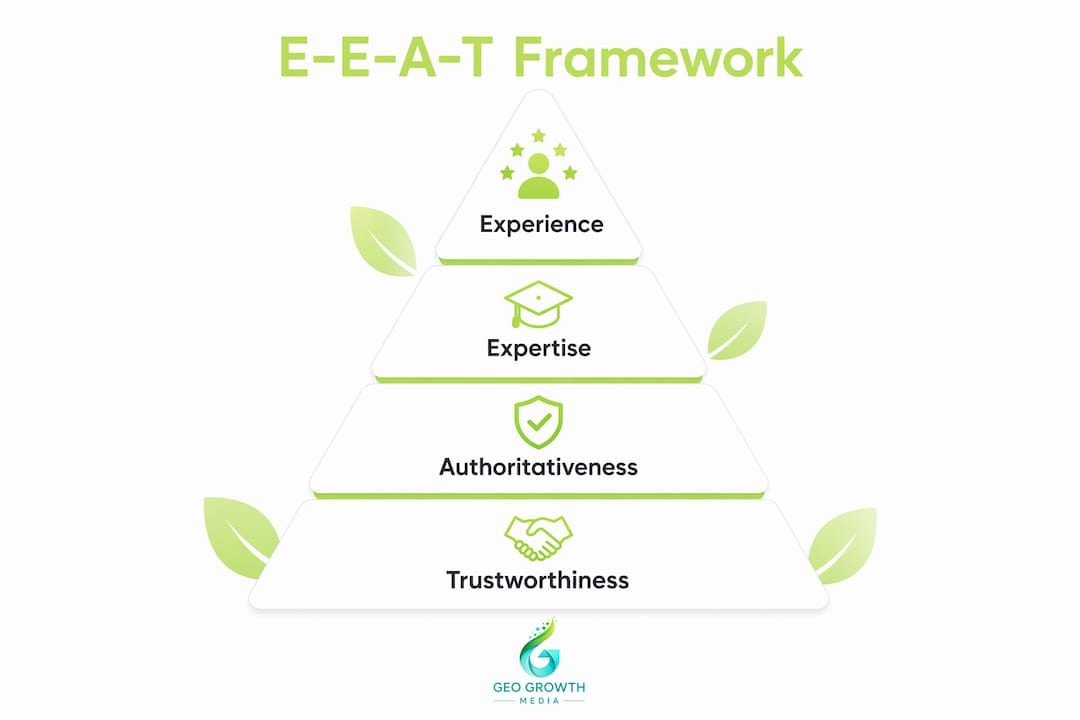
E-E-A-T in SEO is defined as Google’s four-part quality assessment framework covering Experience, Expertise, Authoritativeness, and Trustworthiness. Google’s Search Quality Evaluator Guidelines use these four dimensions to judge whether content deserves to rank. The framework was originally known as E-A-T in SEO before Google added “Experience” as a fourth dimension in december 2022, reflecting a shift toward rewarding content creators with genuine, first-hand knowledge. In 2026, as AI-generated content saturates search results, Google demands sources that are traceable, verifiable, and consistent. Tools like Semrush and Moz can surface proxy signals, but understanding the framework itself is where every strong SEO strategy starts.
What is e-e-a-t in SEO and what does each component mean?
E-E-A-T is not a single metric. It is four distinct quality dimensions that Google’s quality raters and algorithms assess together. Each one targets a different question about your content and its creator.
Experience: have you actually done this?
Experience is the newest addition to the framework, added in December 2022 to reward direct, first-hand involvement with a topic. That addition matters because it separates someone who has genuinely tested a product from someone who has simply read about it. Signals include named authors with credentials, original photographs, specific testing outcomes, and a first-person voice. Content that demonstrates actual use, such as original photos and “I tested this” claims, scores well for Experience because it differentiates first-hand knowledge from theoretical explanation.

Expertise: do you know your subject?
Expertise relates to demonstrated subject-matter knowledge. For a medical article, that means a qualified clinician. For a personal finance piece, it means a certified adviser or someone with a verifiable track record. Google’s quality raters look for credentials, qualifications, and evidence that the author genuinely understands the topic at depth.
Authoritativeness: does your industry recognise you?
Authoritativeness concerns recognition by peers and industry references. Editorial backlinks from respected publications, brand mentions in trade press, and citations from authoritative sources all contribute. Think of it as your professional reputation made visible to search algorithms.
Trustworthiness: can users rely on you?
Trustworthiness is the anchor of the entire framework. It covers transparency, accuracy, website security (HTTPS), clear contact information, and honest sponsorship disclosures. Google treats Trustworthiness as the most critical dimension because a site that cannot be trusted undermines every other quality signal.
Pro Tip: Audit your author bios first. A named author with a linked profile, verifiable credentials, and a clear editorial policy does more for your E-E-A-T signals than a month of link building.
How does e-e-a-t impact SEO rankings?
E-E-A-T does not produce a score that feeds directly into Google’s ranking algorithm. Quality Raters evaluate based on E-E-A-T principles, but the algorithms use proxy signals such as backlink quality, content freshness, and user engagement. That distinction is critical. You cannot “optimise” for a score that does not exist. You build quality, and the algorithm detects it through indirect signals.
The impact of E-E-A-T on rankings is sharpest for YMYL topics. YMYL stands for “Your Money or Your Life” and covers health, finance, legal advice, and safety. Google applies stricter standards to YMYL content because misinformation in these areas carries real-world consequences. A personal finance blog written by an anonymous author will struggle to rank against content produced by a regulated financial adviser, regardless of keyword density or technical SEO.
How long does it take to see results?
Timing is one of the most underestimated factors in E-E-A-T strategy. On-page improvements typically show ranking changes within 8–16 weeks, while broader site authority efforts take 3–6 months to register. That timeline demands patience and a long-term commitment to genuine quality.
| E-E-A-T Effort | Typical Timeframe | Primary Proxy Signal |
|---|---|---|
| Author bio and credential updates | 8–16 weeks | Content freshness, engagement |
| Editorial backlink acquisition | 3–6 months | Backlink quality and relevance |
| Site-wide trust improvements | 3–6 months | Spam detection, user confidence |
| Original media and first-hand content | 8–16 weeks | Engagement metrics |
Pro Tip: Track your E-E-A-T improvements alongside Google Search Console engagement metrics. If dwell time and click-through rates rise after content updates, that is a reliable early signal that your quality improvements are registering.
What are the biggest e-e-a-t misconceptions to avoid?
The most damaging misconception in SEO is treating E-E-A-T as a checklist you can tick off. No official “E-E-A-T score” exists. Scoring emerges from proxy signals that reflect genuine quality, not from surface-level optimisation. Sites that chase cosmetic trust signals instead of substantive indicators often find themselves unable to recover from ranking drops.
“Successful E-E-A-T implementation is about building genuine quality that algorithms detect via natural user satisfaction signals, not mechanical optimisation.” — Digital Codex on E-E-A-T
Here are the most common pitfalls SEO professionals encounter:
- Adding fake trust badges. Displaying unverified “award” icons or fabricated security seals signals inauthenticity. Sites relying on cosmetic trust signals frequently fail to recover from E-E-A-T-related ranking drops.
- Publishing generic content and calling it expert analysis. Summarising what other sources say without adding original insight does not demonstrate expertise. It demonstrates aggregation.
- Treating E-E-A-T as a one-time fix. E-E-A-T is an ongoing discipline. A single author bio update does not compensate for years of thin, anonymous content.
- Ignoring site-wide signals. A single high-quality article on a low-trust domain carries limited weight. Authoritativeness and Trustworthiness are assessed at the domain level as well as the page level.
- Confusing quantity with quality. Publishing more content does not build authority. Publishing content that shows rather than claims real-world knowledge does.
The underlying principle is straightforward. Google prioritises content that demonstrates genuine knowledge over content that performs the appearance of knowledge. That distinction separates sustainable SEO from short-term gains that evaporate with the next algorithm update.
How to improve e-e-a-t for your website
Building strong E-E-A-T signals requires deliberate effort across content, credibility, and technical trust. The good news is that every improvement compounds over time. Here is where to focus.
Demonstrate first-hand experience in your content
Original content is the clearest signal of Experience. Publish case studies that show real client outcomes with named metrics. Include original photographs, screen recordings, or test results. Write in a first-person voice where appropriate and reference specific scenarios you have encountered. This approach to conversational, experience-led content also aligns with how AI-driven search is evolving in 2026.
Work with recognised experts and show their credentials
Working with recognised subject-matter experts and displaying verified author credentials enhances both Expertise and Trustworthiness. Expert review markers, linked author bios, and authoritative citations are key signals that quality raters look for. If you publish health or finance content, having a qualified professional review and sign off on each piece is not optional. It is the baseline.
Build authoritativeness through earned links and brand mentions
Authoritativeness grows through editorial recognition. Pursue backlinks from respected industry publications, trade bodies, and news outlets. Seek brand mentions in relevant press. Contribute guest articles to authoritative sites in your sector. These are the signals that tell Google your brand is recognised by peers, not just by your own website.
| Strategy | E-E-A-T Dimension Targeted | Difficulty |
|---|---|---|
| Named author bios with credentials | Expertise, Trustworthiness | Low |
| Original case studies and media | Experience | Medium |
| Editorial backlinks from trade press | Authoritativeness | High |
| HTTPS, privacy policy, contact page | Trustworthiness | Low |
| Expert review and sign-off process | Expertise, Trustworthiness | Medium |
Prioritise transparency and technical trust
Trustworthiness is built through transparency. Publish a clear privacy policy, terms of service, and contact information. Disclose any sponsored content or affiliate relationships. Maintain HTTPS across your entire site. These are not optional extras. They are the foundation that every other E-E-A-T signal rests on. For a deeper look at how technical foundations support trust signals, technical SEO performance plays a direct role in how Google assesses site credibility.
There are 23 known E-E-A-T signals audited by quality raters, including author credentials, original media, verifiable citations, inbound editorial links, and visible trust policies. Addressing all 23 is a long-term project, but prioritising the highest-impact signals first produces measurable results within a realistic timeframe.
Key takeaways
E-E-A-T is an information governance discipline, not a ranking score, and building genuine quality across all four dimensions is the only sustainable path to improved search visibility.
| Point | Details |
|---|---|
| E-E-A-T is not a direct score | Algorithms use proxy signals like backlinks and engagement to assess quality indirectly. |
| Experience was added in 2022 | First-hand content such as original media and tested outcomes now carries distinct weight. |
| YMYL content faces higher scrutiny | Health, finance, and legal content requires verifiable expert accountability to rank well. |
| Results take time | On-page improvements register in 8–16 weeks; site authority changes take 3–6 months. |
| Cosmetic signals backfire | Fake badges and generic content can prevent recovery from E-E-A-T-related ranking drops. |
Why e-e-a-t has changed how we think about SEO
At Geo Growth Media, we have watched E-E-A-T shift the entire conversation around what SEO actually means. A few years ago, you could build a credible content strategy around keyword research and link volume. Today, that approach gets you so far and no further.
What we have found in practice is that the brands who win in search are the ones who treat their content as a genuine reflection of their knowledge, not as a vehicle for keywords. The addition of Experience in 2022 was the clearest signal yet that Google is moving toward rewarding people who have actually done the thing they are writing about. That is a profound shift for any brand that has relied on outsourced, generic content.
The rise of AI-generated content has accelerated this. When every competitor can produce 2,000 words on any topic in minutes, the differentiator becomes provable, traceable expertise. In 2026, E-E-A-T is less an SEO tactic and more an information governance discipline, as Incremys frames it. The brands that understand this early will build compounding authority. The ones that treat it as another checkbox will keep chasing algorithm updates.
Our advice is to start with your authors. Get real names, real credentials, and real bios in place. Then look at your content and ask honestly: does this show what we know, or does it just say it? That question alone will tell you where your E-E-A-T work needs to begin.
— Geo Growth Media
Ready to build an SEO strategy that earns trust?
Understanding E-E-A-T principles is one thing. Putting them into practice across your entire content and technical infrastructure is another challenge entirely.

At Geo Growth Media, our SEO services are built around the same principles Google rewards: genuine expertise, transparent content practices, and authority built through earned recognition. We work as an extension of your marketing team, developing strategies tailored to your sector, audience, and growth targets. Whether you need a full E-E-A-T audit, a content credibility overhaul, or a backlink strategy that builds real authority, we are ready to help. Get in touch with Geo Growth Media today to discuss what a trust-led SEO strategy looks like for your business.
FAQ
What does e-e-a-t stand for in SEO?
E-E-A-T stands for Experience, Expertise, Authoritativeness, and Trustworthiness. It is the quality assessment framework Google uses through its Search Quality Evaluator Guidelines to evaluate content.
Is e-e-a-t a direct google ranking factor?
E-E-A-T is not a direct ranking signal or score. Google’s algorithms use proxy signals such as backlink quality, content freshness, and user engagement to assess quality indirectly.
Which types of content does e-e-a-t affect most?
E-E-A-T has the greatest impact on YMYL topics, covering health, finance, legal advice, and safety, where Google applies stricter standards to prevent misinformation reaching users.
How long does it take to improve e-e-a-t rankings?
On-page E-E-A-T improvements typically show ranking changes within 8–16 weeks. Broader site authority efforts, such as editorial backlink building, generally take 3–6 months to register.
What is the single most important e-e-a-t signal to fix first?
Trustworthiness is the anchor of the framework. Start with named author bios, HTTPS, a clear privacy policy, and honest sponsorship disclosures before addressing other dimensions.



.png)