.png)

.svg)


Every few months, someone declares SEO dead. In 2026, that claim is louder than ever, fuelled by the rise of AI-powered search and generative answers. But the data tells a different story. AI referral traffic is growing at 357% year on year, yet it still accounts for just 0.1% to 1.08% of total site traffic. SEO is not dying. It is splitting into layers, and the businesses that understand those layers will pull ahead. This article breaks down what is genuinely changing, what is staying the same, and exactly what SEO and digital marketing managers at SMBs need to prioritise right now.
Table of Contents
- Why SEO is not dead: What the data really shows for 2026
- Emergent SEO trends for 2026: What’s truly new
- How multimodal and omnichannel strategies power SEO success
- AI, zero-clicks, and measuring SEO differently in 2026
- Practical action plan: How SMBs can prepare for SEO in 2026
- Drive your 2026 SEO strategy with expert support
- Frequently asked questions
Key Takeaways
| Point | Details |
|---|---|
| Organic SEO still vital | AI search and GEO rely on organic SEO foundations, making them critical for SMBs in 2026. |
| Structured data powers AI | Structured data and E-E-A-T are now qualifying factors for AI search visibility. |
| Multimodal boosts discovery | Video, social, and omnichannel content are essential for maximising exposure and leads. |
| Measure modern metrics | Track citation share, AI traffic, and brand sentiment, not just clicks and visits. |
| Adapt for global SEO | Translation alone is not enough; tailor content for specific market intent. |
Why SEO is not dead: What the data really shows for 2026
The “SEO is dead” narrative resurfaces every time a new technology disrupts search. It happened with voice search, featured snippets, and now AI overviews. Each time, the fundamentals proved more resilient than the headlines suggested. 2026 is no different.
The most telling statistic comes from citation analysis: 99% of AI overview citations still originate from the top 10 organic results. That means if you are not ranking organically, you are almost certainly invisible in AI-generated answers too. Organic search is not competing with AI search. It is feeding it.
Classic technical skills remain non-negotiable. Crawlability and Core Web Vitals are still essential signals that determine whether your content gets indexed, ranked, and ultimately cited. If your site is slow, broken, or poorly structured, no amount of clever content will save it. Understanding why invest in SEO has never been more relevant for SMBs weighing their marketing budgets.
| Source of AIO citations | Share of citations |
|---|---|
| Top 10 organic results | 99% |
| Results ranked 11 and beyond | 1% |
| Paid results | Negligible |
“The hybrid approach wins in 2026. Brands that treat AI optimisation and traditional SEO as separate disciplines will fall behind those that integrate them from the start.” — Leading SEO strategist, Moz 2026 Predictions Panel
For e-commerce teams, the implications are especially sharp. Our e-commerce growth SEO guide outlines how organic visibility directly supports product discovery across both traditional and AI-powered search environments.
Emergent SEO trends for 2026: What’s truly new
With the foundation confirmed, the real question is: what has actually changed? Several shifts are rewriting how SEO specialists should approach their work this year.
Structured data has moved from a nice-to-have to a hard qualifier. Structured data is now a qualifier for inclusion in AI search results, not merely a ranking boost. If your pages lack schema markup, AI systems may simply skip them when generating answers, regardless of content quality.
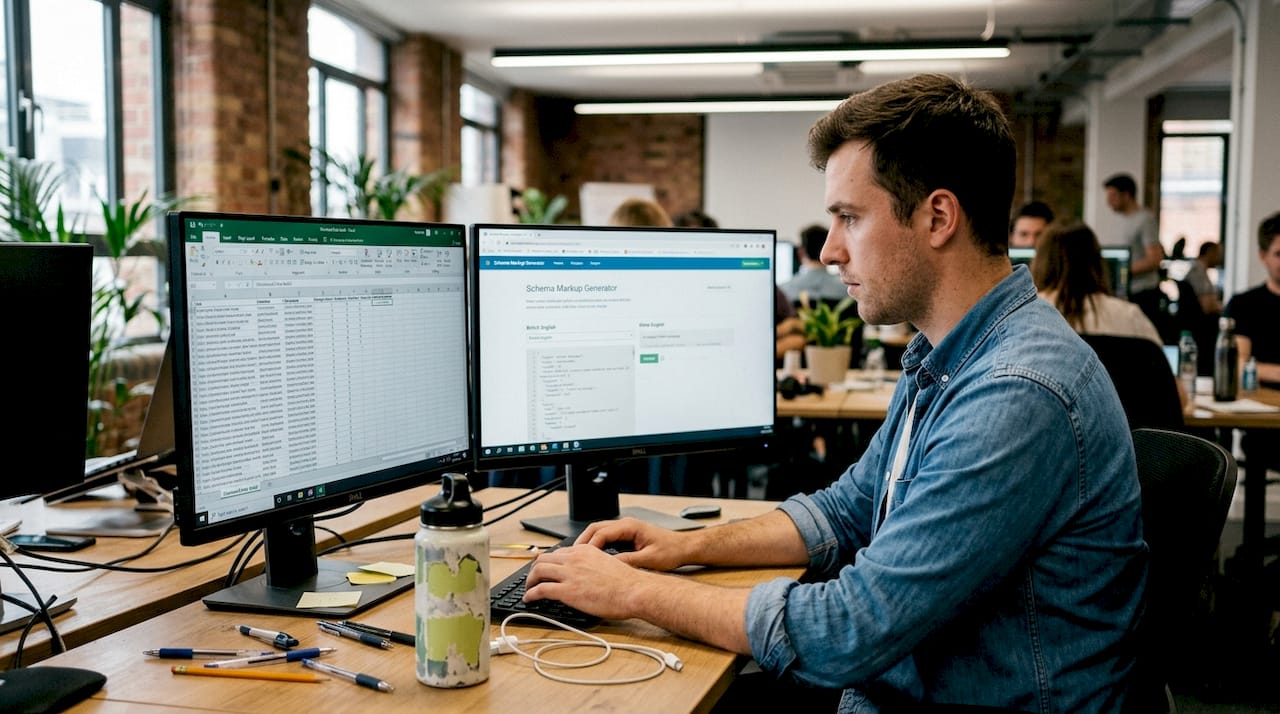
E-E-A-T and topical authority matter more than freshness for most content types. Google and AI systems alike are rewarding demonstrated expertise, real authorship signals, and depth of coverage over recency, except in news and fast-moving topics. Human-authored content with clear credentials is outperforming generic AI-generated pages in competitive niches.
Here are the most important SEO trends to act on in 2026:
- Structured data as an AI qualifier: Schema markup is now essential for AI citation eligibility
- E-E-A-T signals: Author bios, credentials, and first-hand experience are ranking factors
- Topical authority over volume: Fewer, deeper articles beat large quantities of thin content
- Content refresh cycles: Updating key pages every 6 to 9 months maintains authority signals
- Conversational query optimisation: Long-tail, question-based queries are growing with AI search
- Local and market-specific intent: Generic content underperforms against locally relevant pages
Pro Tip: When building content for different markets, do not simply translate your existing pages. Localise the intent. A search for “best accountant” in Manchester carries different expectations than the same query in Birmingham. Our guide on SEO strategies for SMBs covers this in detail, and our resource on optimising for conversational search explains how to structure content for AI-driven query patterns.
How multimodal and omnichannel strategies power SEO success
Search is no longer a single-channel activity. Users discover brands through YouTube, TikTok, Instagram, Google Images, and AI chat interfaces, often before they ever type a query into a traditional search bar. Multimodal and omnichannel optimisation are now the baseline expectation, not an advanced tactic.
“Multimodal” means your content exists in multiple formats: text, video, image, and audio. “Omnichannel” means those formats are consistent and discoverable across every platform your audience uses. Together, they create a brand presence that search engines and AI systems can recognise, trust, and cite.

Social media now functions as a secondary search engine. Younger audiences in particular use TikTok and Instagram to search for products, services, and local businesses. Ignoring these platforms means missing a growing share of top-of-funnel discovery.
| Channel | 2024 traffic role | 2026 traffic role |
|---|---|---|
| Google organic search | Primary | Primary + AI feed |
| Social media | Supplementary | Secondary search engine |
| Video (YouTube, TikTok) | Optional | Essential for discovery |
| AI chat interfaces | Negligible | Growing referral source |
Here is a practical checklist for launching an omnichannel SEO presence in 2026:
- Audit your existing content and identify which pieces can be repurposed into video or visual formats
- Optimise your Google Business Profile and ensure NAP (name, address, phone) consistency across all directories
- Create short-form video content that answers your top 10 most searched questions
- Add schema markup to every key page, including FAQ, product, and how-to schemas
- Publish consistently on at least two social platforms where your audience actively searches
- Cross-link your social content back to your website to build referral signals
For SMBs managing lean teams, our resources on digital marketing for e-commerce and scalable SMB social strategies offer practical frameworks that do not require enterprise-level budgets.
AI, zero-clicks, and measuring SEO differently in 2026
One of the most disorienting shifts for digital marketing managers this year is the decoupling of visibility from traffic. You can appear in an AI-generated answer, earn a brand mention, and influence a purchase decision without a single click ever reaching your website.
357% year-on-year growth. That is how fast AI referral traffic is rising, even though it still represents just 0.1% to 1.08% of total traffic for most sites. The absolute numbers are modest today, but the trajectory is steep. Brands building AI visibility now are positioning themselves for a much larger share as adoption accelerates.
Zero-click searches compound this challenge. Measuring SEO performance is harder when users get answers directly in search results without visiting your site. Traditional metrics like sessions and pageviews no longer capture the full picture of your search presence.
The KPIs worth tracking in 2026 include:
- Citation share: How often your brand or content appears in AI-generated answers
- AI search visibility: Your presence in tools like ChatGPT, Perplexity, and Google AI Overviews
- Brand sentiment: What is being said about your brand across forums, reviews, and social platforms
- Branded search volume: A proxy for growing brand awareness driven by AI and social discovery
- Assisted conversions: Revenue influenced by organic touchpoints that did not result in a direct click
Pro Tip: Set up Google Alerts and use tools like Brand24 or Mention to track where your brand appears in AI-generated content and third-party sources. This indirect visibility is increasingly where purchase intent is shaped. Our digital marketing measurement guide and resource on measuring digital results can help you build a reporting framework that reflects this new reality.
Practical action plan: How SMBs can prepare for SEO in 2026
Knowing the trends is one thing. Turning them into a workable plan with limited time and budget is another. Here is a prioritised action plan built for SMB marketing teams.
- Run a technical SEO audit first. Fix crawl errors, improve page speed, and ensure Core Web Vitals pass before investing in content. A broken foundation wastes every other effort.
- Add structured data to your top 20 pages. Prioritise FAQ schema, product schema, and article schema. This is your entry ticket to AI citation eligibility.
- Identify your five core topics and build depth. Choose the subjects most relevant to your business and create genuinely thorough content around each. Thin coverage across 50 topics loses to deep coverage across five.
- Schedule content refreshes every 6 to 9 months. E-commerce organic growth benchmarks suggest 8 to 12% year-on-year growth is achievable with consistent topical authority focus. Stale content erodes that advantage quickly.
- Launch one omnichannel content format. Pick video or visual content and commit to a consistent publishing schedule on one platform before expanding.
- Localise, do not just translate. If you operate in multiple regions, create market-specific content that reflects local intent, not just local language.
- Update your measurement dashboard. Add citation share, branded search volume, and AI visibility alongside your standard traffic metrics.
Pro Tip: When evaluating paid search alongside SEO, look at blended ROAS across both channels. Our search engine marketing guide explains how to balance organic and paid investment for maximum return at different stages of business growth.
Drive your 2026 SEO strategy with expert support
Adapting to these shifts takes more than reading about them. It takes consistent execution, the right tools, and a strategy built around your specific market and goals. At Geo Growth Media, we work as an extension of your marketing team, not a distant agency sending monthly reports.
Whether you need a full SEO consultancy session to audit your current position, or you want a team to handle technical SEO, content planning, and structured data implementation end to end, our SEO services are built for ambitious SMBs that want measurable results. We also design high-converting landing pages that turn your improved search visibility into actual leads and sales. Get in touch to discuss what a tailored 2026 SEO strategy looks like for your business.
Frequently asked questions
Are AI search engines replacing traditional SEO in 2026?
No. AI search is growing rapidly but still depends on organic rankings to source its citations. 99% of AI citations come from the top 10 organic results, making traditional SEO more important than ever.
How often should I refresh my website’s content for SEO in 2026?
Aim to update key pages every 6 to 9 months. Consistent content refreshes are linked to sustained topical authority and organic growth benchmarks of 8 to 12% year on year.
Which SEO metrics should I track for success in 2026?
Beyond traffic, track citation share, AI search visibility, and brand sentiment. Measuring SEO is harder with zero-click searches rising, so indirect signals matter more than ever.
Does translation only work for international SEO now?
No. Translation alone is insufficient. You need content that reflects market-specific intent for each region, as AI systems are increasingly good at distinguishing localised relevance from generic translated pages.
Is social media important for SEO results?
Yes. Social platforms now act as secondary search engines, particularly for younger audiences. Visibility on TikTok, Instagram, and YouTube directly influences brand discovery and organic search demand.
Recommended
- SEO strategy examples to boost SMB growth in 2026
- Top social media strategies for scalable SMB growth in 2026
- How SEO drives growth for startups in 2026 (748% ROI)
- Why measure digital marketing results for SMB success in 2026
- What is search engine ranking for restaurants in 2026 | Sorbey Blog | Sorbey


.png)